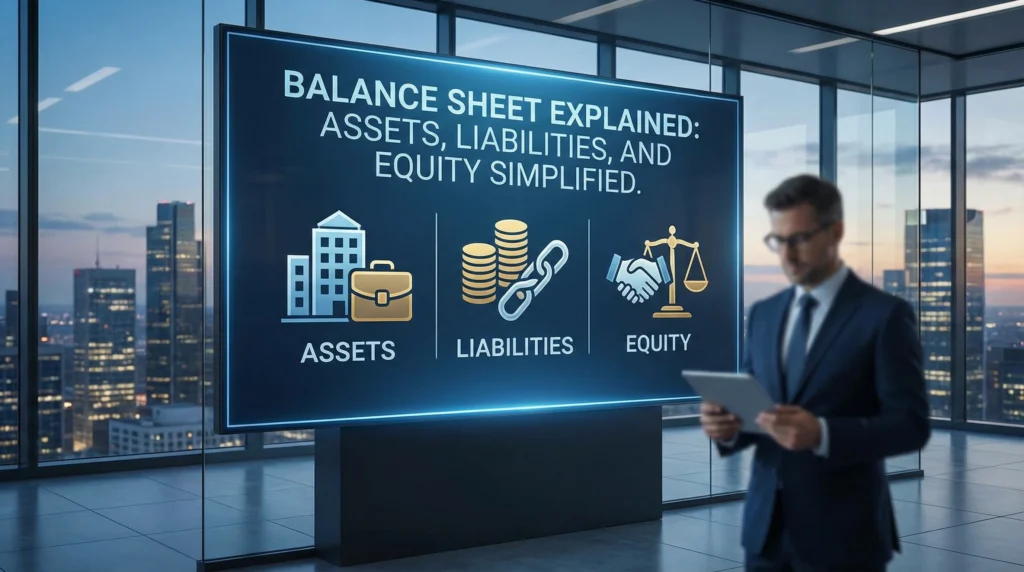
Balance Sheet Explained: Assets, Liabilities, and Equity Simplified

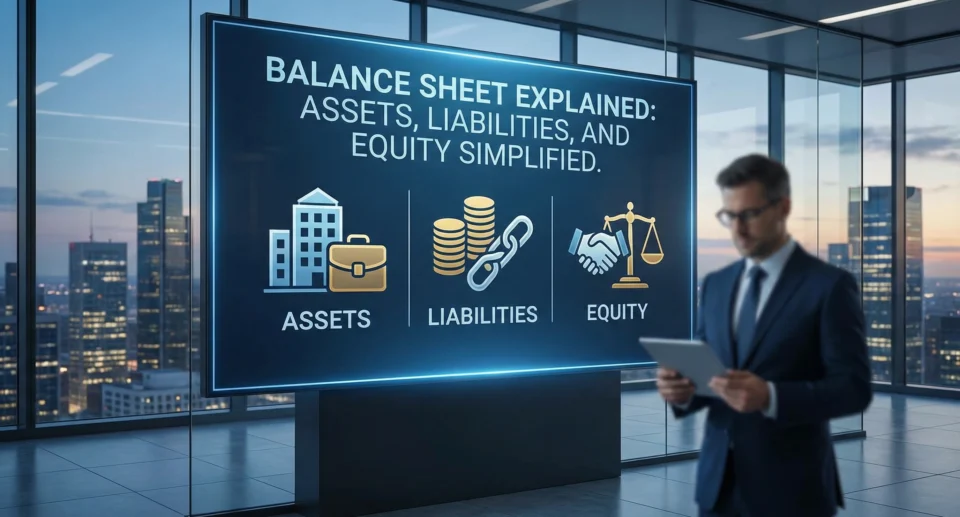
Table of Contents
If you’ve ever looked at a company’s financial statements, the balance sheet might have looked like a mess of numbers. Don’t worry; you’re not the only one. At first, it might seem like a mess of debts, assets, and ownership stakes. But if you look at it closely, it’s really just a picture of what a business owns, what it owes, and how much its owners are worth. You can think of it as a snapshot of the company’s finances on a certain day. The balance sheet shows the financial position at a specific point in time, while the income statement shows how money has come in and gone out over time.
What a Balance Sheet Is
A balance sheet is basically a report that tells you what a company has and how it pays for it. There are three main parts to it: Assets are things that the business owns. Liabilities are the things that the company owes. Equity is the owners’ share of the business. The name “balance sheet” comes from the fact that these three parts always fit the equation: Liabilities + Equity = Assets The company has to get everything it owns from somewhere, either by borrowing it or by having shareholders own it.
What the Company Owns: Assets
Assets are things that a business owns and expects to make money from in the future. To put it simply, assets are things that can help the business make money or keep their value. They usually come in two main types:
Current Assets: short-term resources that are expected to be used or turned into cash within a year. Some examples are:
Cash and things that are like cash Accounts receivable is the money that customers owe. Stock Investments for a short time
Non-Current Assets: things that the company owns and uses for a long time. For example:
Buildings, land, and equipment (offices, factories, and machinery) Patents, trademarks, and other types of intellectual property Investments for the long term Knowing what assets a company has helps you see what it owns and how it can make money with them. A lot of productive assets usually means that the company can run well.
What the Company Owes: Liabilities
Liabilities are debts or promises to pay—fancy words for debts. These are demands on the company’s resources from creditors or other parties. Liabilities, like assets, are usually split into two groups:
Current Liabilities: debts that are due within a year. For example:
Money owed to suppliers is called accounts payable. Loans for a short time Expenses that have built up over time, like taxes or wages
Non-Current Liabilities: debts that will last a long time. For example:
Payable bonds Loans for a long time Pension duties Liabilities show how much the company depends on short-term debts and borrowed money. Having more liabilities than assets could mean risk, while having manageable liabilities means your finances are stable.
Equity: The Owners’ Share
After subtracting liabilities from assets, equity is what is left over in the company. In other words, it’s what the owners or shareholders get to keep after all the debts are paid. Equity is made up of: Common stock is money that shareholders put into the company. Retained earnings are profits that are kept in the business instead of being paid out as dividends. Extra paid-in capital is the money that shareholders put in above the stock’s par value. Equity is like the base of the company’s net worth.
What the Balance Sheet Says
It’s the connections between the numbers that really help you understand. For example: You can tell if a company is liquid by looking at its current assets and current liabilities. Can it pay its short-term bills? Financial leverage is the amount of debt a company uses to run its business, which can be seen by comparing total liabilities to equity. Trends over time show growth or possible stress. A growing asset base and manageable debts are often signs of stability. In short, the balance sheet is more than just numbers; it shows how a business handles its money and other responsibilities.
Making Common Terms Easy
There is a special language used in balance sheets, but you don’t need a degree in accounting to understand it: Current Assets − Current Liabilities = Working Capital. A positive number means the business can meet its short-term obligations. Debt-to-Equity Ratio = Total Liabilities ÷ Equity. Shows how much of the company’s money comes from debt compared to shareholders’ money. The book value is the total assets minus the total liabilities. According to its accounting records, this is how much the company is worth. You can quickly figure out how healthy your finances are by knowing these simple ratios.
Why Balance Sheets Are Important
Balance sheets help investors, managers, and analysts make choices: Investors want to know about growth potential, liquidity, and risk. Managers keep an eye on how resources are used and how well operations run. Creditors look at how well the company can pay back loans. Even for workers, knowing how to read a balance sheet can help them understand how safe their jobs are and how well the company is doing.
Things to Be Careful About
Numbers don’t tell the whole story, even though balance sheets are useful: Methods of valuation: Assets may be listed at their historical cost instead of their current market value. Off-balance-sheet items: Some debts, like leases or contingent liabilities, may not show up directly. One-time events: Big buys or sells can make numbers look bigger or smaller for a short time. Knowing these things will help you not misread the company’s financial health.
A Simple Way to Keep It in Mind
The balance sheet is like a picture of a company’s wallet: Assets are everything in the wallet. Liabilities are debts that you owe to other people. Equity is what you really own after paying off your debts. Everything is in balance, which makes it easier to understand the company’s real financial situation.
What the conclusion is about
A company’s balance sheet shows how well it is doing financially at a certain point in time. Anyone, from investors to employees, can figure out how well resources are managed, debts are paid, and value is created by knowing about assets, liabilities, and equity. When you look at relationships and trends instead of just the numbers, it becomes easier to read balance sheets.