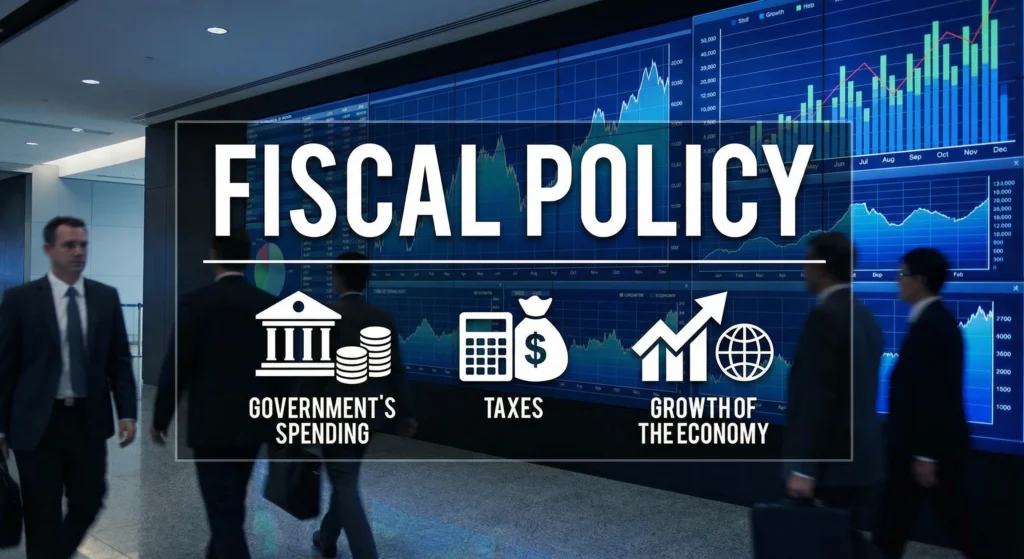
What is fiscal policy? It is the government’s spending, taxes, and growth of the economy.

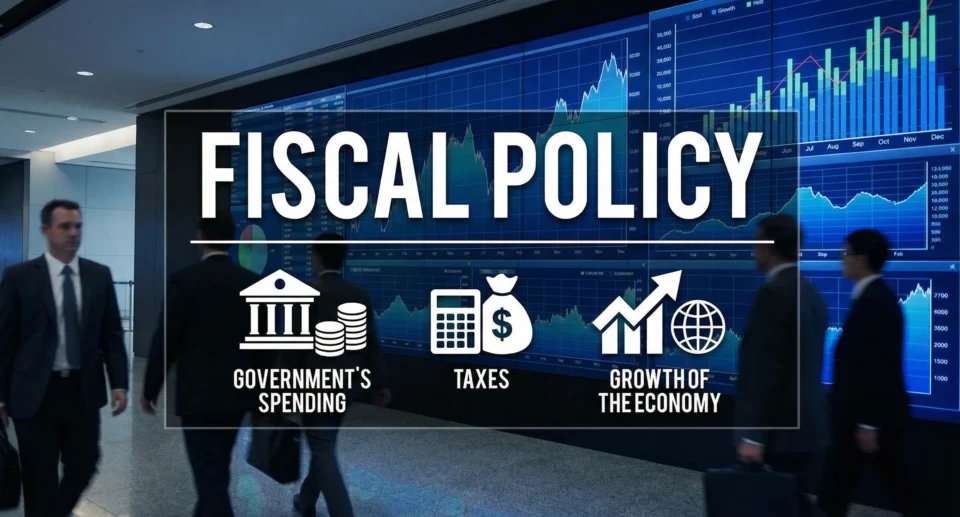
Table of Contents
Fiscal policy may sound like something that only politicians or economists care about when you hear it. But the truth is that it affects your life in more ways than you might think, like your pay cheque, your taxes, your local schools, roads, and even the prices at the grocery store.
In short, fiscal policy is how governments choose to get money and spend it. It sounds simple, but the effects are huge. A single choice about taxes or government spending can have an effect on the whole economy, from creating jobs to raising prices to overall growth.
Let’s go over it step by step in a way that makes sense and doesn’t use too much technical language.
What Fiscal Policy Really Means
Fiscal policy is really about two things:
Government spending: Where the money goes, like schools, hospitals, defence, infrastructure, and social programs.
Taxes: The government gets money from things like income taxes, corporate taxes, sales taxes, and more.
Spending and taxes work like levers when they are together. If you push one up or down, you change the direction of the economy.
The government is like a big manager trying to keep the economy on track by speeding it up when it slows down and slowing it down when it gets too hot.
Two Main Types of Fiscal Policy: Expansionary Fiscal Policy
Governments often take an expansionary approach when the economy slows down. That usually means:
- Spending more on things like schools, roads, or health care
- Lowering taxes to give people more money
What is the goal? Encourage people to spend and invest, which creates jobs and helps the economy grow.
It’s like giving the economy a little push when it’s moving too slowly.
Fiscal Policy That Makes Things Worse
On the other hand, a government might make things harder when the economy is growing too quickly or prices are going up. That’s what contractionary policy means. Common steps are:
- Spending less
- Increasing taxes
It’s not very popular—higher taxes never are—but it helps keep prices from going crazy and the economy from getting too hot.
How Government Spending Affects the Economy
The most direct way for fiscal policy to work is through spending. When a government spends money, it doesn’t just build schools and roads; it also gives money to people and businesses.
For instance:
- When you pay contractors to build a new highway, they have to hire people, buy materials, and spend their own money.
- When healthcare programs get money, hospitals can hire more people, buy more supplies, and make their services better.
To put it another way, spending has a ripple effect. Every dollar the government spends goes around the economy and creates more activity than the first dollar spent.
The Other Side of Taxes
Governments get the money they need to spend through taxes. But they don’t just pay for projects; they also change how people act.
People and businesses have more money to spend and invest when taxes are lower. That can help the economy grow.
Higher taxes lower disposable income, which can slow down spending. However, they also help keep inflation in check and pay for important services.
It’s a balancing act. Too much tax can slow down growth. Not enough can lead to budget shortfalls or even debt crises.
Deficits in the budget and the national debt
You may have heard about the government’s debt and deficits. Here’s the short version:
When a government spends more than it brings in in taxes in a year, it has a budget deficit.
National debt is the total of all those deficits over time.
Deficits aren’t always bad; they can be used smartly to boost the economy during times of recession. But if you keep running up deficits, you can end up with a lot of debt, which costs you more in interest payments and makes it harder to deal with future crises.
Monetary Policy vs. Fiscal Policy
People often mix up fiscal policy and monetary policy, but they are not the same.
Fiscal policy is the government’s choices about how much to spend and how much to tax.
Monetary policy is what the central bank does with interest rates and the amount of money in the economy.
They both want to stabilise and grow the economy, but they do it in different ways and with different tools. When they work together, they do their best work.
Automatic Stabilisers: The Economy’s Safety Nets
Not all fiscal tools need new laws to work. Some of them are automatic, which means they start working without lawmakers having to pass new laws. These are known as automatic stabilisers.
Some examples are:
- Unemployment benefits: Payments go up automatically when more people lose their jobs.
- Progressive taxes: When people’s incomes go down, they pay less tax.
These tools help the economy stay stable during slowdowns without having to wait for changes in policy.
How It Affects You in Real Life
So how does fiscal policy really affect your life?
- Job opportunities: Government-funded projects make jobs available.
- Taxes and spending pay for roads, schools, and health care.
- Inflation and the cost of living: Prices change when policies that speed up or slow down the economy are put in place.
- Interest rates and borrowing: The health of the economy can affect what the central bank does, which in turn affects loans and mortgages.
The decisions that governments make about taxes and spending affect your daily life, even if you don’t pay much attention to politics.
Problems with Putting Fiscal Policy into Action
It isn’t easy. Governments have to make hard choices:
- If you don’t spend enough, the economy can stop growing.
- If you spend too much, you get into debt.
- If you cut taxes to get people to spend more, you might not have enough money for important services.
When you do it also matters. Policies don’t always have their full effect right away. It can take months or even years for them to do so. Instead of making things more stable, bad timing can make them less stable.
Fiscal Policy in Emerging Economies
Developing countries often have to deal with even more problems:
- Low tax income
- A lot of people are poor
- Relying on loans from outside sources
- Weakness to global shocks
In these situations, choices about fiscal policy can have even bigger effects on growth, jobs, and social stability.
Why Fiscal Policy Is Still Important
Fiscal policy is a strong tool, even though it has its problems. If done right, it can:
- Encourage growth when things are tough
- Keep prices from going up
- Give people services that make their lives better
- Have an effect on long-term economic stability
It’s not perfect, and it’s not magic, but it’s one of the few tools a government has to change the economy in real ways.
Summary of the Conclusion
Fiscal policy is more than just numbers on a budget sheet. The government uses spending and tax decisions to steer the economy. This affects jobs, inflation, and growth. It helps you understand the rules that affect your daily life, even if the effects aren’t always obvious or happen right away.